Screw piles
All pile types and their advantages.

Knowledge · Water
A jetty, a boathouse or a deck above the water: with concrete it is awkward, because concrete has to cure and dewatering is expensive. We screw piles down to bearing ground below the bed, even from a floating pontoon.
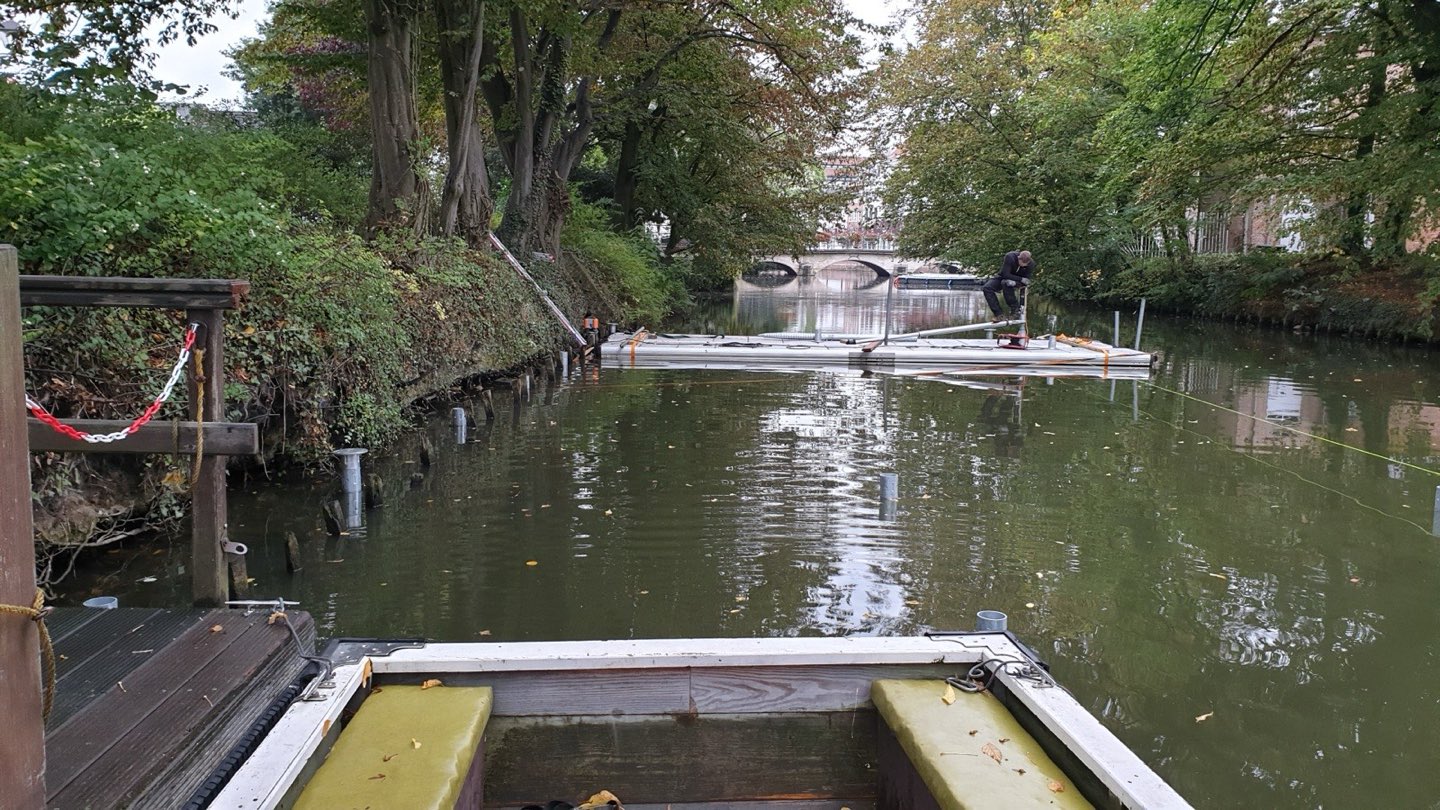
For the boathouse in Lier we worked mostly from a pontoon on the river. For Tomorrowland we put an excavator with a hydraulic drive head on a floating pontoon and installed the piles in the middle of the lake, without a site road to the shore.
Banks and beds are often soft: clay, silt or peat. We screw through them down to a bearing layer, with extensions if needed. In very soft ground we sometimes deliberately choose a pile that settles with the ground, so the structure does not end up sticking out above ground level.
In the zone where the water rises and falls, and in aggressive soil such as peat with fluctuating groundwater, we choose a thicker wall or extra protection, such as coated piles.
Work at or in a watercourse often needs permission from the water authority. Check beforehand with your local council or the watercourse manager.
Soiltek is a specialist contractor, not an engineering firm. We provide the manufacturer's product data and align the pile proposal with your structural engineer.
All pile types and their advantages.
For light and medium structures.
How many piles do you need?
All topics in one place.
Yes. We screw the piles in at the edge and in the pond, with no concrete in the water.
No. Screw piles are screwed through the water into the bed, from a pontoon if needed.
In the splash zone and in aggressive soil we choose a thicker wall or coated piles.
Send us the dimensions or a plan. We reply within two working days.
Request a quoteRead also: Wind load and uplift: a foundation that does not pull out · How long does a steel screw pile last? · Foundations on clay, sand or peat: what does your soil mean?