Screw piles
All pile types and their advantages.

Knowledge · Soil
A CPT sounding (cone penetration test) is the fastest way to know what lies under your building plot. It shows layer by layer whether there is sand, clay, loam or peat, and where the bearing ground begins.
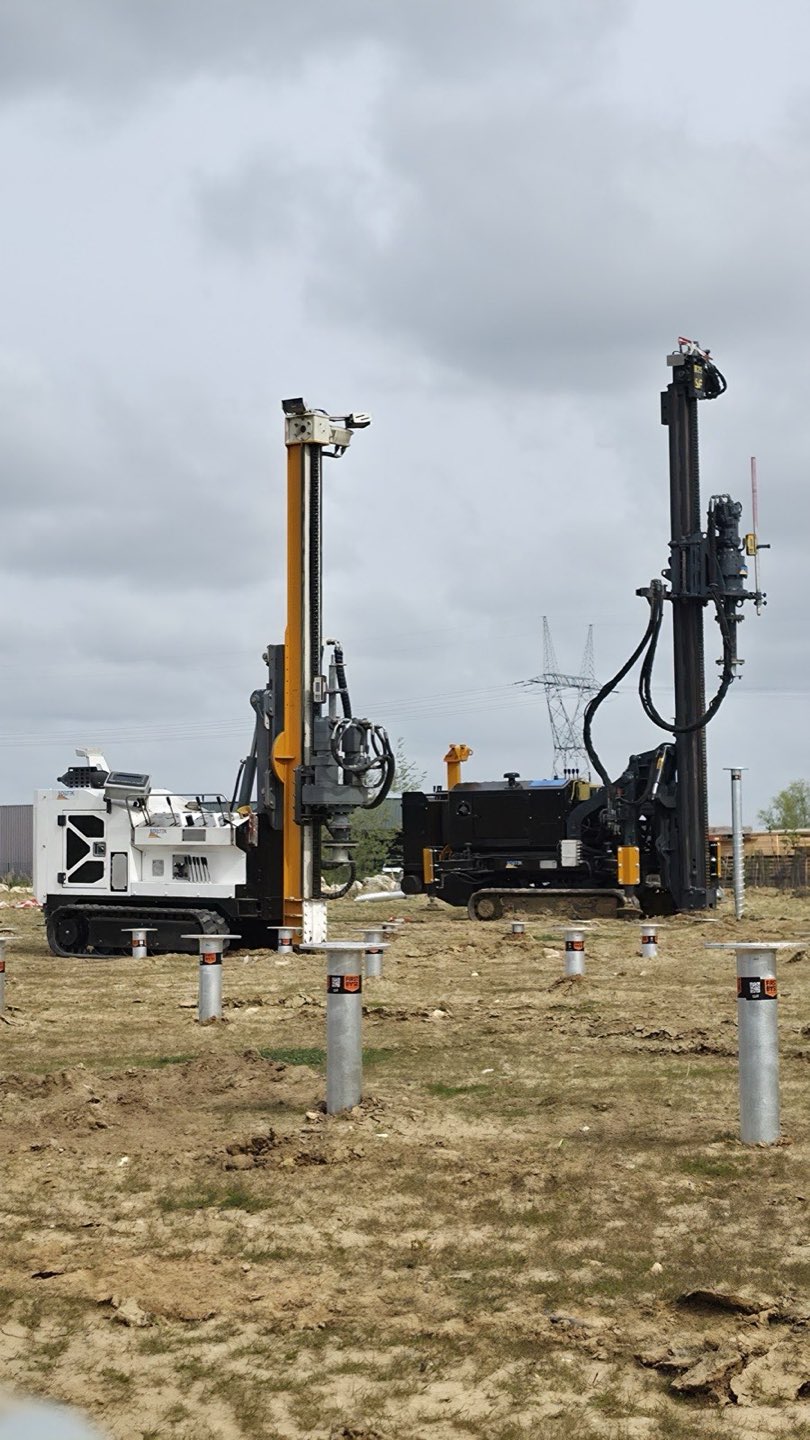
A steel rod with a cone tip is pushed into the ground at a constant speed. The device continuously measures the resistance on the tip (cone resistance qc) and the friction along a sleeve (fs).
In Flanders many soundings are in the DOV database. In Wallonia you can check Geoportail. Sometimes a sounding nearby is enough for a first idea.
Soiltek is a specialist contractor, not an engineering firm. We provide the manufacturer's product data and align the pile proposal with your structural engineer.
All pile types and their advantages.
For light and medium structures.
How many piles do you need?
All topics in one place.
A CPT measures resistance continuously and so shows the layers. A borehole brings up soil samples, on which a lab can determine, for example, the plasticity of clay. For damage from shrinking clay, Buildwise combines both.
As deep as needed to find the bearing layer, often several metres below the planned pile tip.
A specialist site investigation firm. We start from the result to choose the pile and the depth.
Send us the dimensions or a plan. We reply within two working days.
Request a quoteRead also: Installation torque and capacity: how you know a screw pile will hold · Screw pile or concrete foundation: which fits your project? · How long does a steel screw pile last?